Jean Philippe Arthur Dubuffet (31 July 1901 – 12 May 1985) was a French painter and sculptor. His idealistic approach to aesthetics embraced so-called “low art” and eschewed traditional standards of beauty in favor of what he believed to be a more authentic and humanistic approach to image-making. He is perhaps best known for founding the art movement art brut, and for the collection of works—Collection de l’art brut—that this movement spawned. Dubuffet enjoyed a prolific art career, both in France and in America, and was featured in many exhibitions throughout his lifetime.
Artistic style
Dubuffet’s art primarily features the resourceful exploitation of unorthodox materials. Many of Dubuffet’s works are painted in oil paint using an impasto thickened by materials such as sand, tar and straw, giving the work an unusually textured surface. Dubuffet was the first artist to use this type of thickened paste, called bitumen. Additionally, in his earlier paintings, Dubuffet dismissed the concept of perspective in favor of a more direct, two-dimensional presentation of space. Instead, Dubuffet created the illusion of perspective by crudely overlapping objects within the picture plane. This method most directly contributed to the cramped effect of his works.
From 1962 he produced a series of works in which he limited himself to the colours red, white, black, and blue. Towards the end of the 1960s he turned increasingly to sculpture, producing works in polystyrene which he then painted with vinyl paint.
Other enterprises
In late 1960–1961, Dubuffet began experimenting with music and sound and made several recordings with the Danish painter Asger Jorn, a founding member of the avant-garde movement COBRA. The same period he started making sculpture, but in a very not-sculptural way. As his medium he preferred to use the ordinary materials as papier-mâché and for all the light medium polystyrene, in which he could model very fast and switch easily from one work to another, as sketches on paper. At the end of the 1960s he started to create his large sculpture-habitations, such as ‘Tour aux figures’, ‘Jardin d’Hiver’ and ‘Villa Falbala’ in which people can wander, stay, and contemplate. In 1969 ensued an acquaintance between him and the French Outsider Art artist Jacques Soisson.
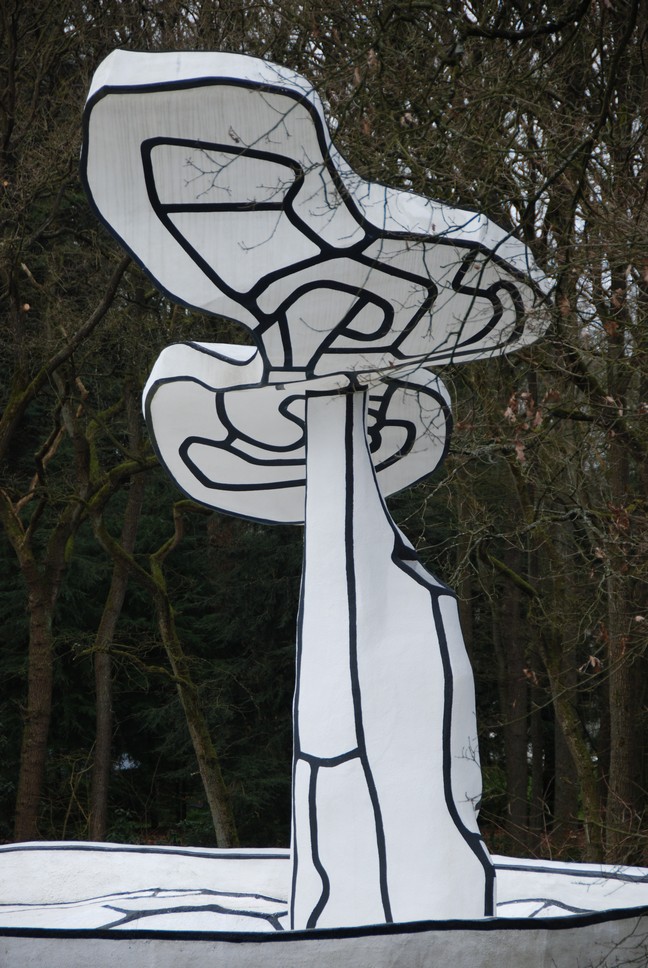
In 1974 Dubuffet created Jardin d’émail: a very large outdoor painted sculpture designed for the Kröller-Müller Museum.
In 1978 Dubuffet collaborated with American composer and musician Jasun Martz to create the record album artwork for Martz’s avant-garde symphony entitled The Pillory. The much written about drawing has been reproduced internationally in three different editions on tens-of-thousands of record albums and compact discs. A detail of the drawing is also featured on Martz’s second symphony (2005), The Pillory/The Battle, performed by The Intercontinental Philharmonic Orchestra and Royal Choir.
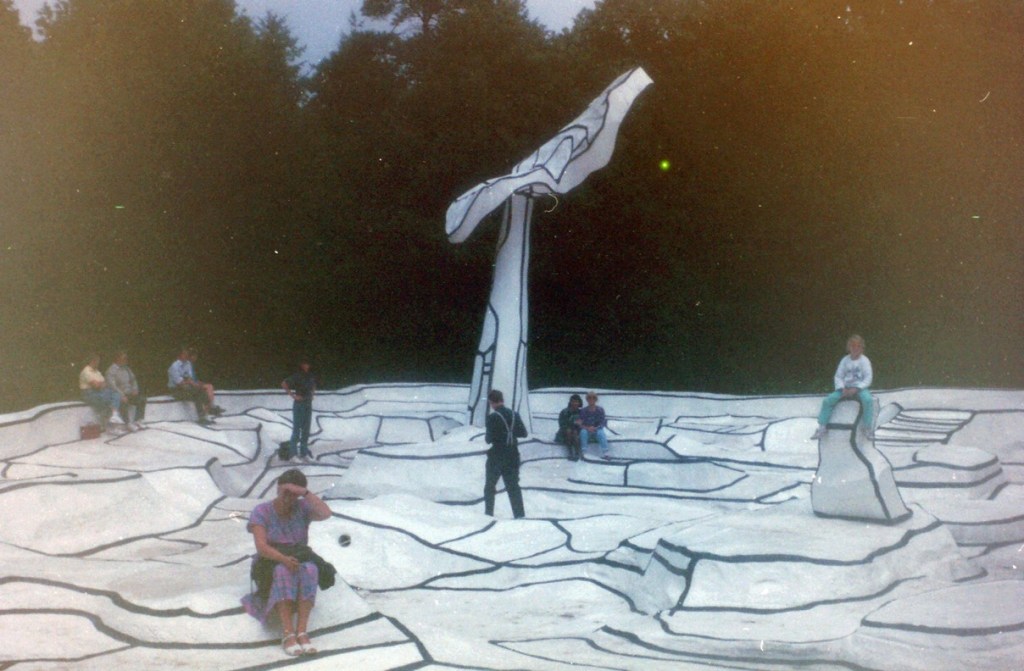
Jardin d’émail, 1974, Kröller-Müller Museum, Arnhem, The Netherlands
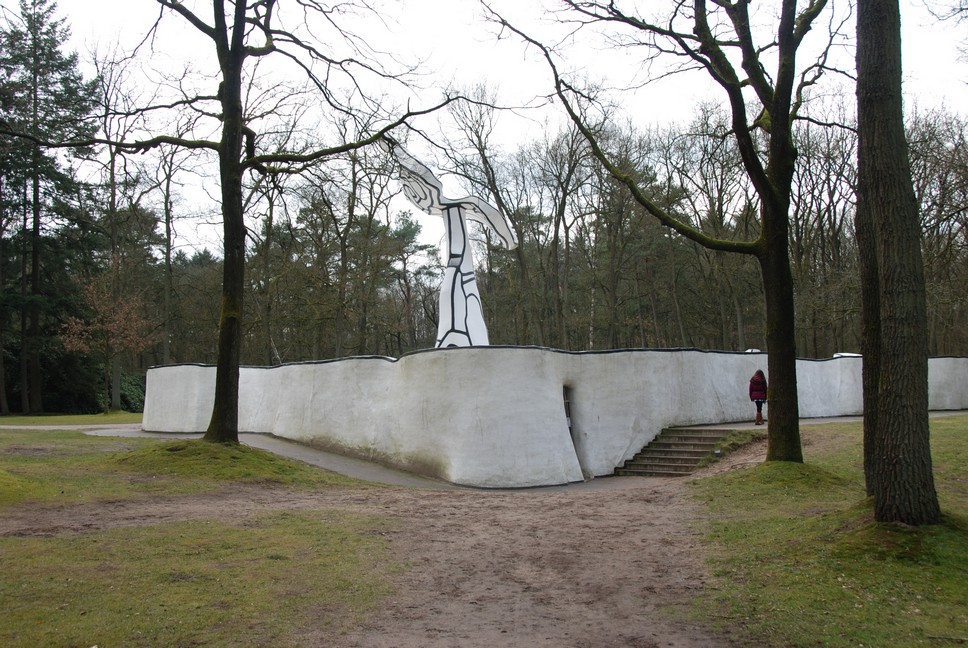
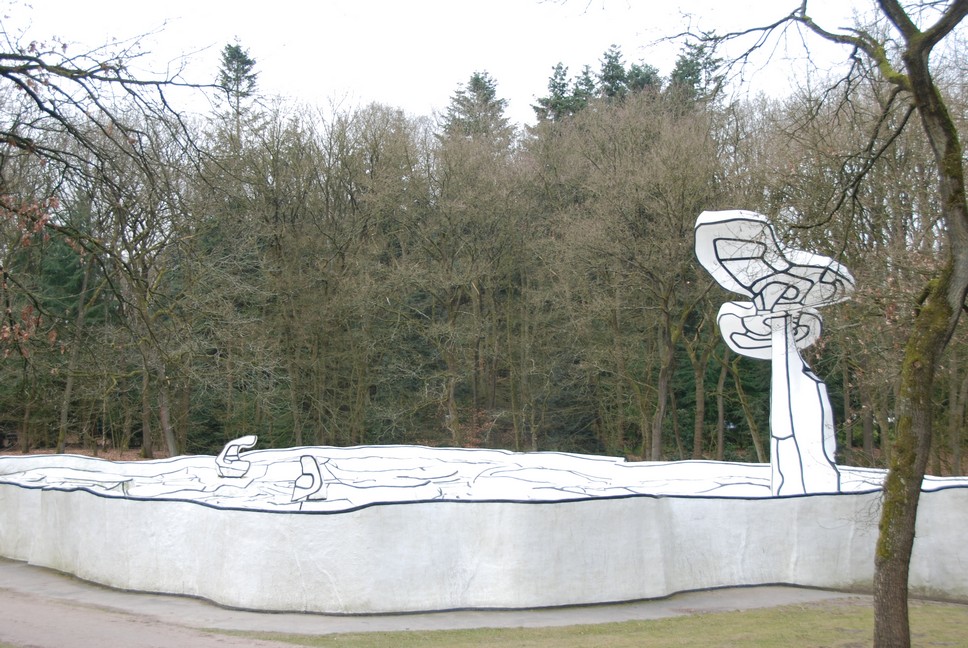
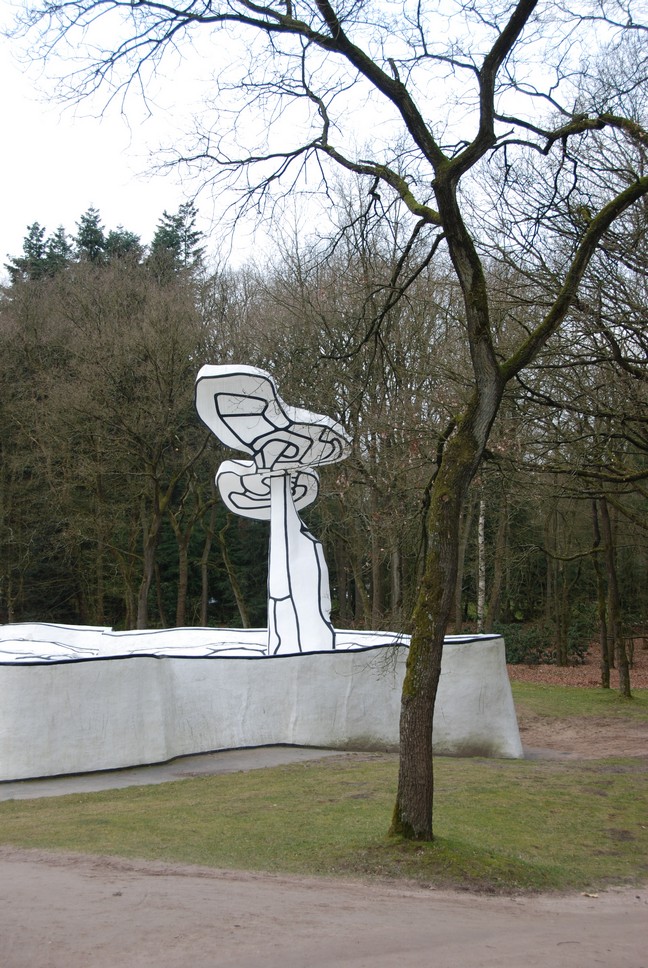
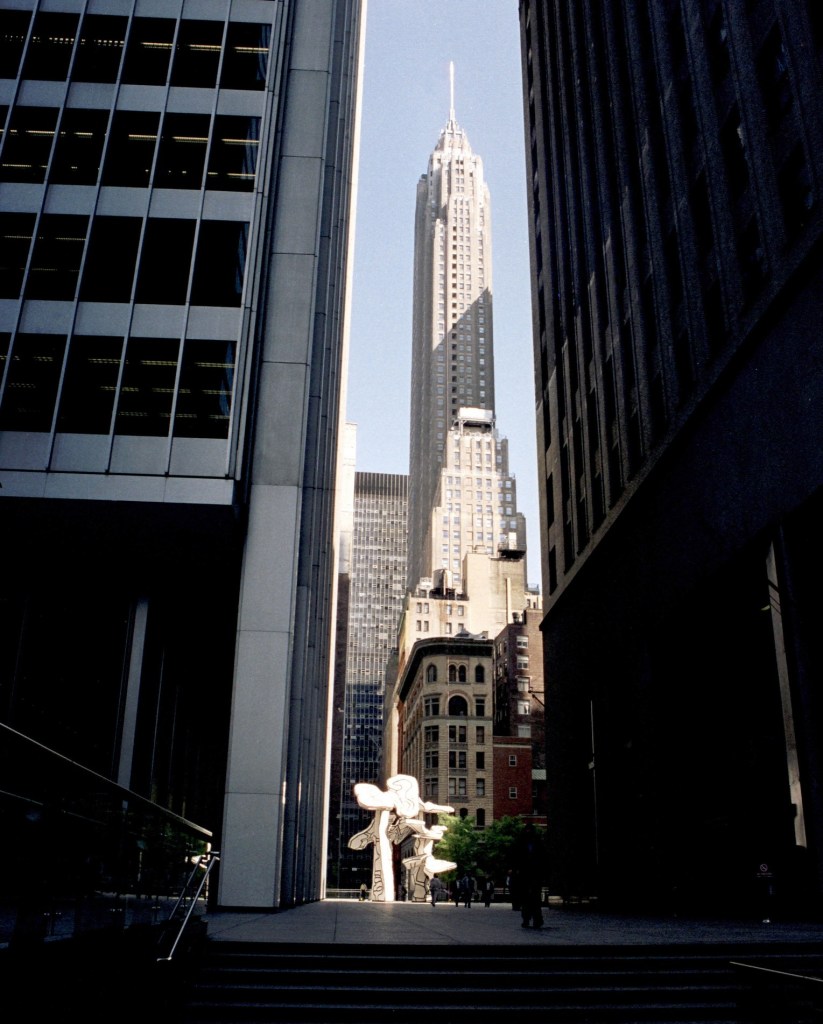
Group of Four Trees, 1969-72, Chase Manhattan Bank Plaza, New York, USA
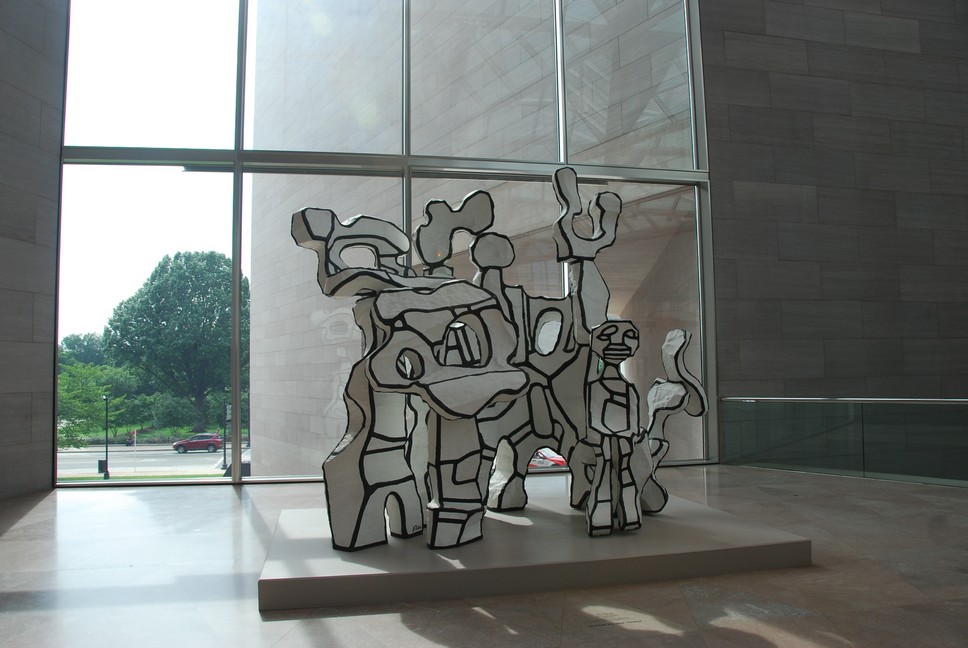
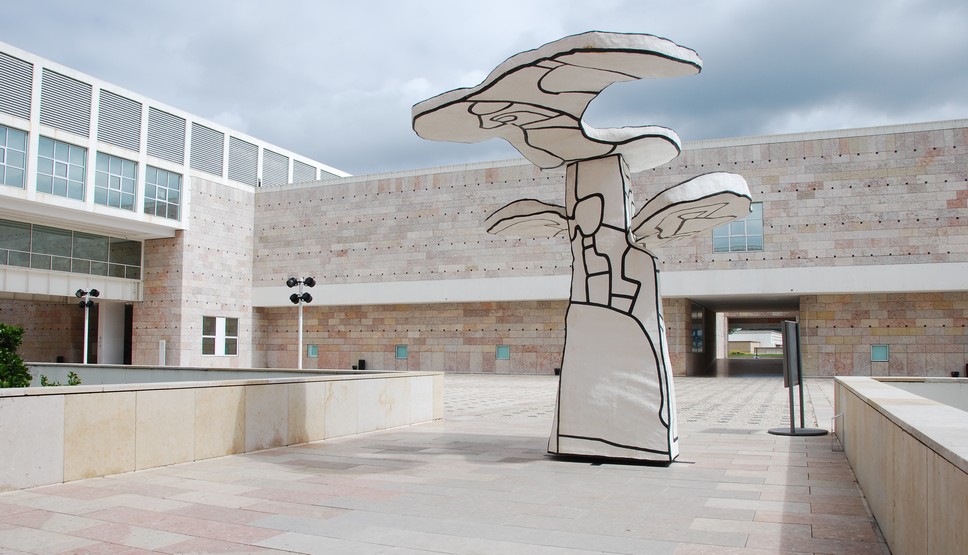
L’arbre biplan (1968), CCB, Lisbon, Portugal
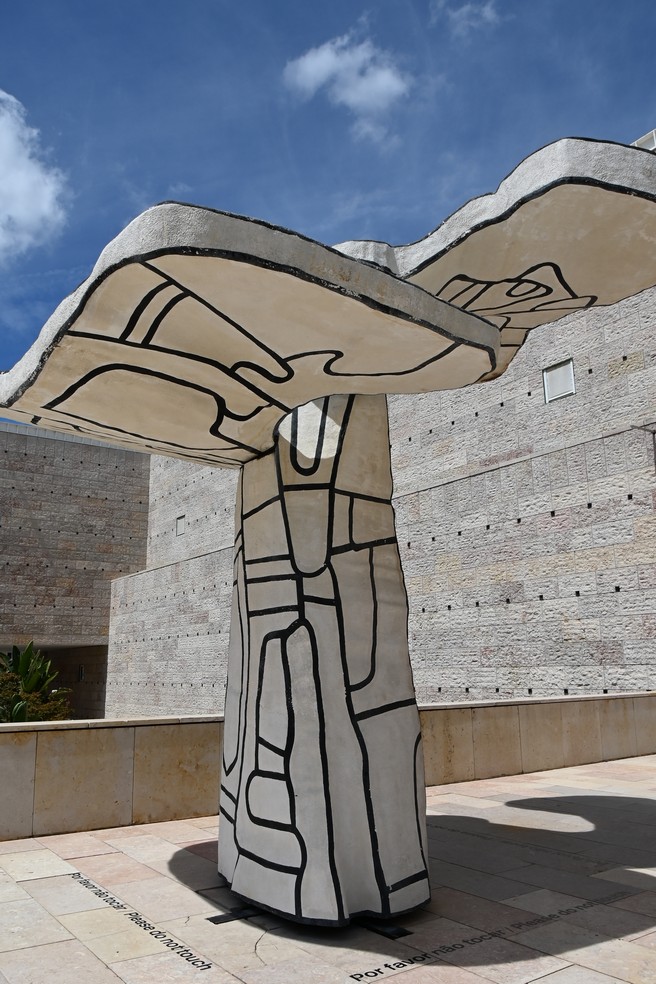
L’arbre biplan (1968), CCB, Lisbon, Portugal
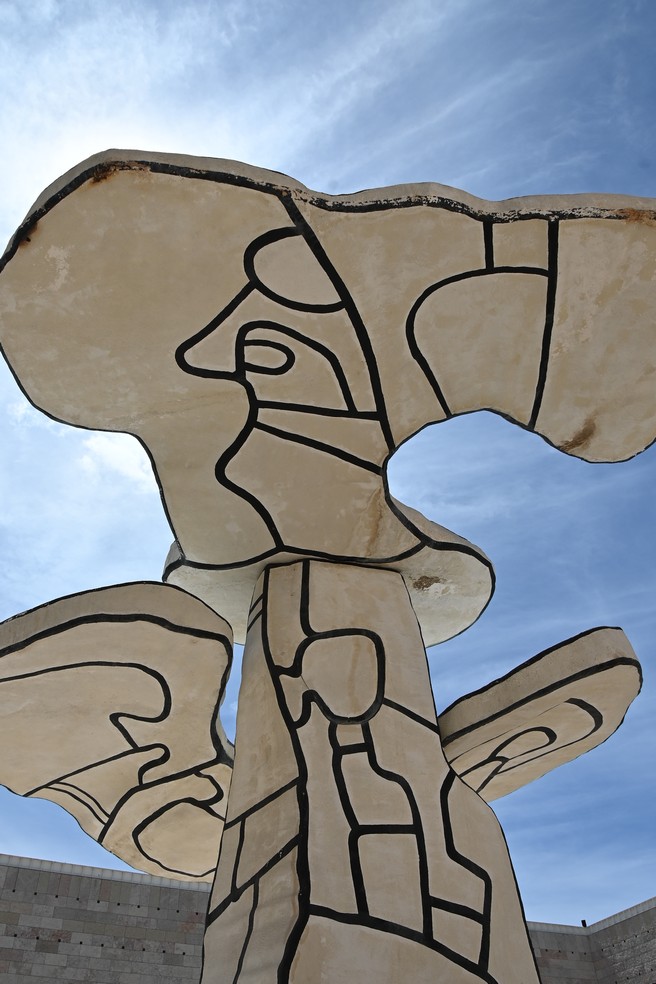
L’arbre biplan (1968), CCB, Lisbon, Portugal
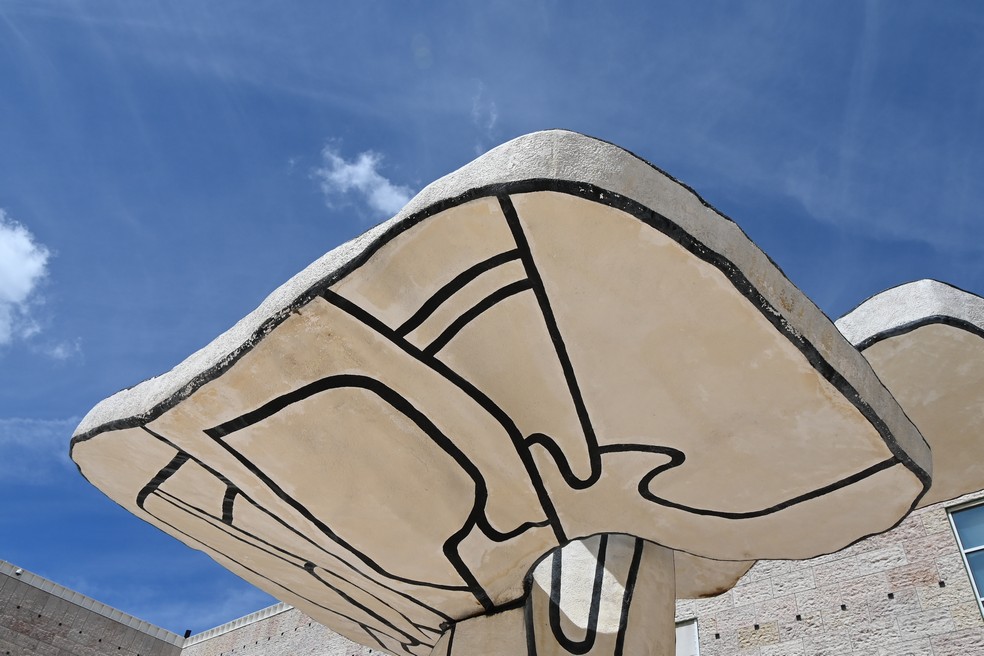
L’arbre biplan (1968), CCB, Lisbon, Portugal
 The State Visits - Collected Art