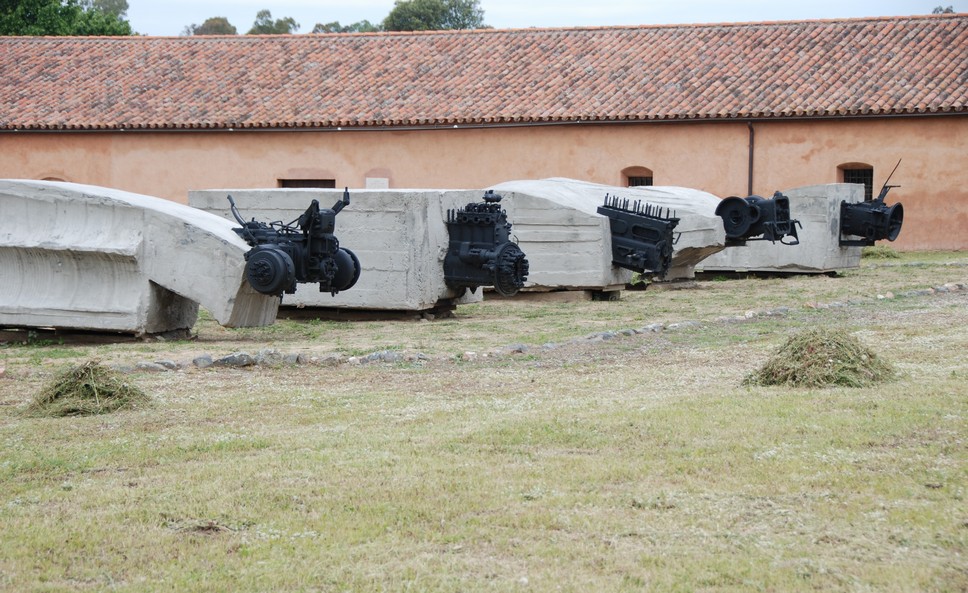
Wolf Vostell (14 October 1932 – 3 April 1998) was a German painter and sculptor, considered one of the early adopters of video art and installation art and pioneer of Happenings and Fluxus. Techniques such as blurring and Dé-coll/age are characteristic of his work, as is embedding objects in concrete and the use of television sets in his works.
From 1950 on, Vostell implemented his first artistic ideas, in 1953 he began an apprenticeship as a lithographer and attended the Werkkunstschule at the Bergische Universität with Ernst Oberhoff in Wuppertal. On 6 September 1954 in Paris, he found the word décollage (i.e. to lift off, loosen, loosen the glued, separate) on the title page of Le Figaro, which was used in connection with the crash of a Lockheed Super Constellation into the Shannon. Vostell changed the spelling to Dé-coll/age and applied the term to his poster tear-offs and happenings. For Wolf Vostell, Dé-coll/age became a design principle and a comprehensive concept of art.
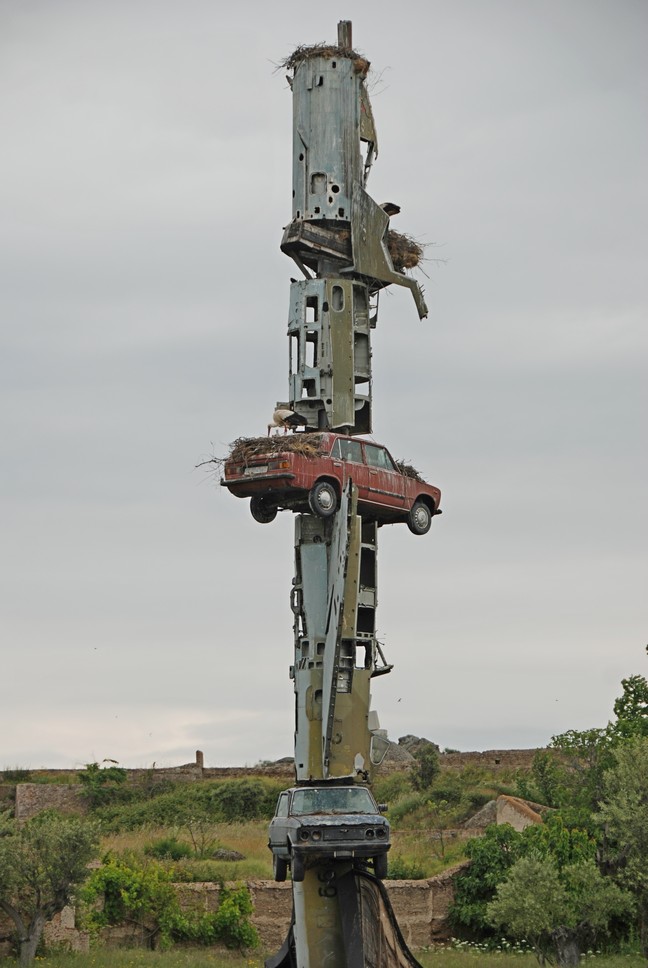
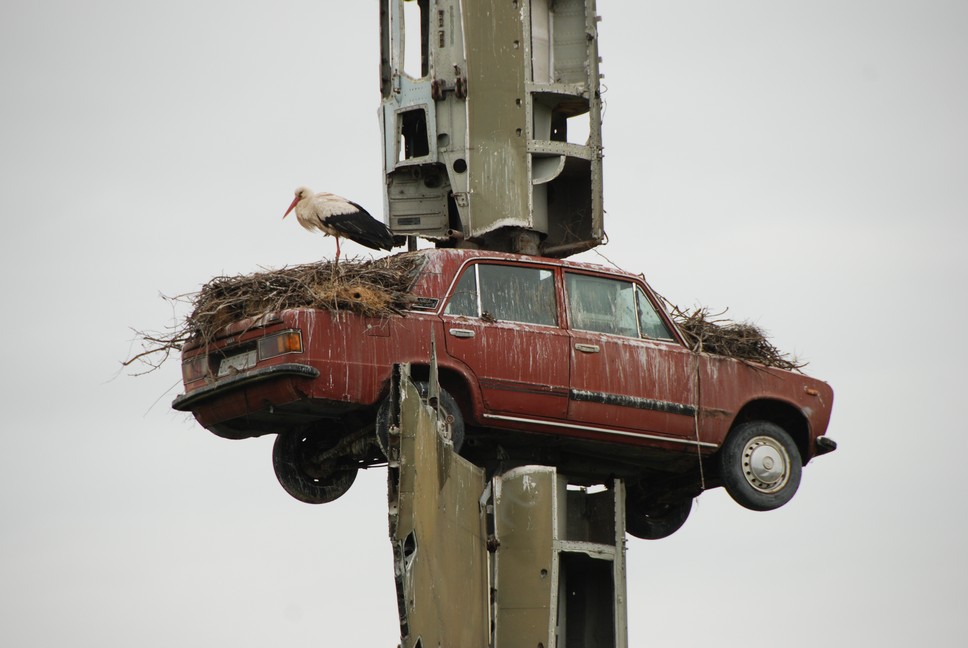
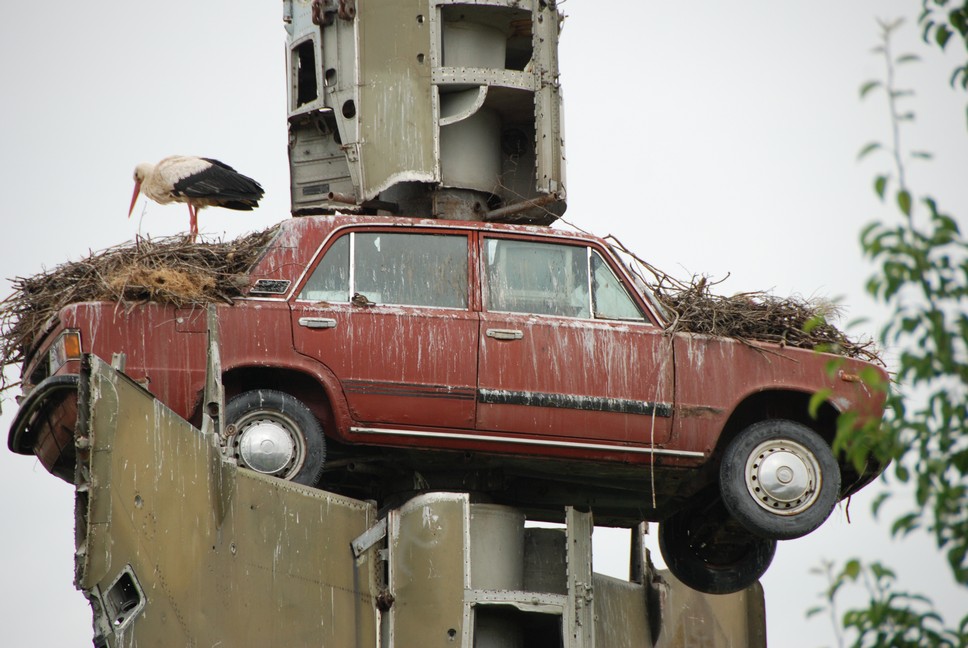
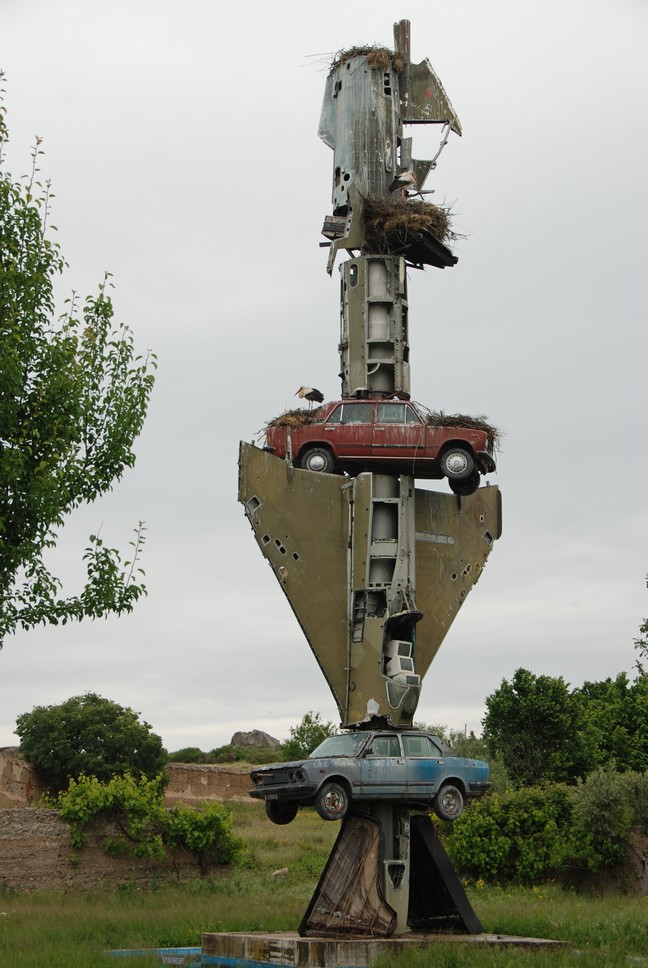
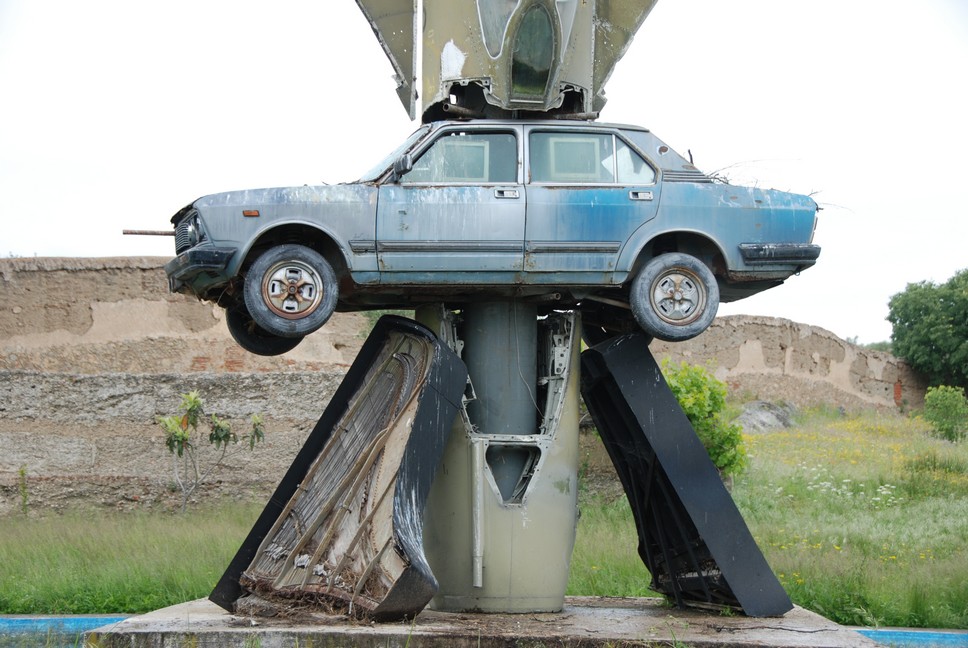
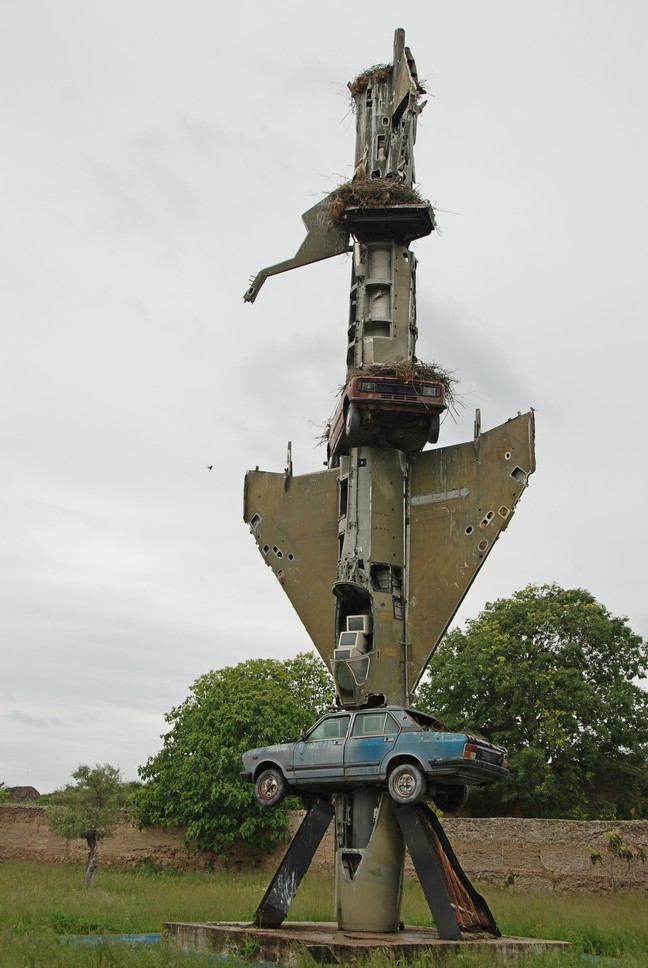
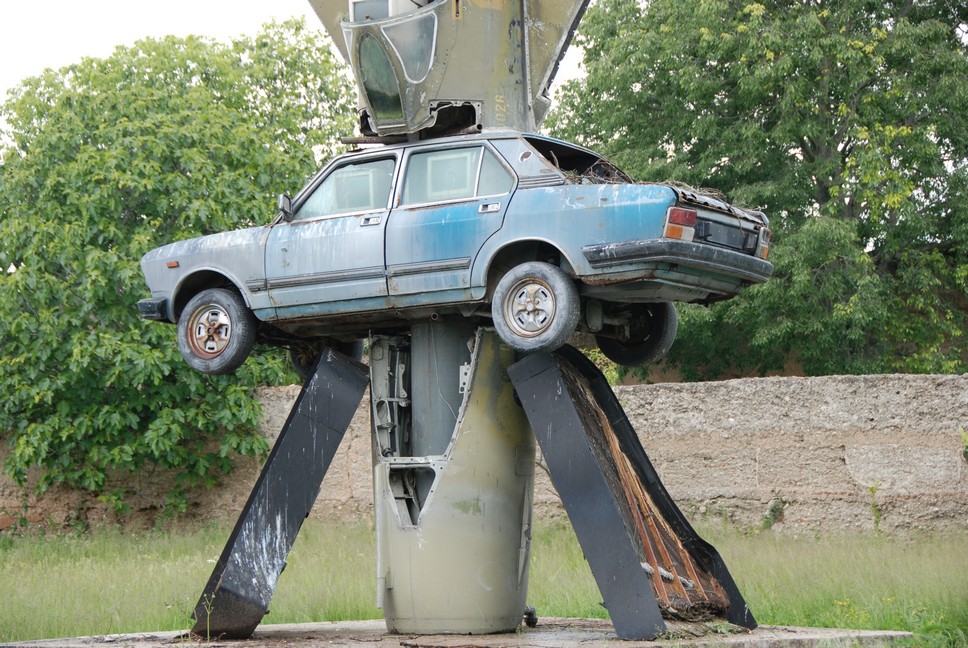
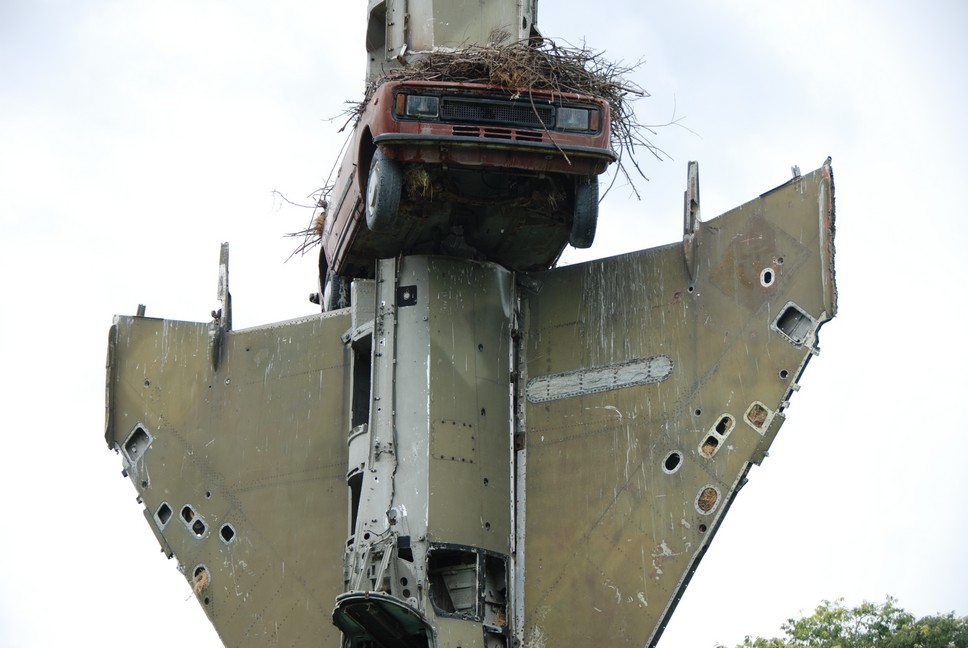
In 1955/1956 he attended the Parisian École nationale supérieure des beaux-arts and in 1957 the Düsseldorf Art Academy. Vostell’s Happening Das Theater ist auf der Straße from 1958 in Paris was the first happening in Europe. His happening Cityrama of 1961 in Cologne was the first happening in Germany. Vostell produced objects with televisions and car parts. Influenced by the work of Karlheinz Stockhausen in the electronic studio of the WDR, electronic TV-Dé-coll/agen were produced in 1959. This marked the beginning of his involvement in the Fluxus movement, which he co-founded in 1962.
In 1959 Vostell founded the Vostell-archive. Wolf Vostell collected photographs, artistic texts, personal correspondence with companions like Nam June Paik, Joseph Beuys, Dick Higgins, as well as other objects, which documented the work of the artists of his generation. Since the 1990s, Vostell’s private library has been part of the archive. His work is documented photographically and is also part of the archive, which has been housed in the “Museo Vostell Malpartida” since 2006.
Vostell initiated further happenings, among others 9-Nein-dé-coll/agen in Wuppertal in 1963, the Happening You in New York in 1964 and others in Berlin, Cologne, Wuppertal and Ulm. In 1963 Wolf Vostell became a pioneer of video art with the installation 6 TV Dé-coll/age in the collection of the Museo Reina Sofía Madrid and with the video Sun in your head. In 1965 he took part in the 24-hour happening at the Galerie Parnass in Wuppertal. In 1967 he dealt with the Vietnam War in the happening Miss Vietnam. In 1968, in collaboration with the composer Mauricio Kagel and others, he founded Labor e.V., which was to research acoustic and visual events.
Vostell is regarded as the first artist who integrated a television set into a work of art. This environment from 1958, consisting of three assemblages, entitled Das schwarze Zimmer (German View, Auschwitz Spotlight 568, Treblinka) is part of the collection of the Berlinische Galerie. Early works with televisions are Transmigracion I to III, from 1958, and Elektronischer dé-coll/age Happening Raum, an installation from 1968.
Since the 1950s Wolf Vostell has thematized the Holocaust in numerous works. Wolf Vostell did not want to express with his outward appearance that he was Jewish by his appearance he rather carried his values to the outside world and thus directed himself unambiguously against the danger of suppressing or even forgetting the extermination of European Jews by the German National Socialists. With his temple curls, fur hat and caftan, he was a perfect match for the image of the enemy that the propaganda of the Hitler regime had painted as an anti-Semitic stereotype, following the example of the Eastern European Jews. He exaggerated this image by using other attributes, such as ostentatious rings on his fingers and an equally thick cigar, which in slanderous caricatures from the Nazi era had been symbolically given to the “money-greedy Jewish usurer”.

 The State Visits - Collected Art